Boning Knife vs. Fillet Knife: The Right Blade for the Job at the Cleaning Table
AI-generated header image for: Boning Knife vs. Fillet Knife: The Right Blade for the Job at the Cleaning Table
Most anglers own a fillet knife. Fewer own a boning knife. And almost none can clearly explain why each blade exists or when to reach for one over the other. That gap in knowledge costs real meat at the cleaning table, and it's more common than you'd think.
The debate around boning vs fillet knife comes down to one fundamental principle: blade geometry determines function. These two knives are not interchangeable variations of the same tool. They are purpose-built instruments with different spine thickness, flex profiles, tip geometry, and edge angles, each engineered to handle a specific type of cut. Using a flexible fillet knife to work through a heavy bone structure doesn't just feel awkward; it can damage the blade and leave meat behind. Using a stiff boning knife on a thin, flat species forces the cut instead of following the anatomy, tearing flesh in the process.
In this post, you'll learn exactly how these blades differ structurally, what each one is actually designed to do, which species demand which knife, and why keeping both at your cleaning station is the most practical decision you can make.
Blade Geometry Is Everything: How These Two Knives Are Built
Every design decision on these two knives traces back to one question: what does the blade need to push through?
A boning knife carries a thicker, stiffer blade, typically 5 to 7 inches long, with a straight tip and a slight upward curve. That geometry is built for force. When you're driving through ligaments, connective tissue, or heavy bone structure, rigidity is a functional requirement. Blade flex under lateral pressure causes the edge to wander off the bone line and into flesh, producing a tear instead of a clean separation. The stiff spine transfers force directly to the tip, keeping the cut exactly where you intend it.
A fillet knife is built on the opposite logic. Blades run 5 to 9 inches, thinner in profile, with a more pronounced upward curve and a sharp, swept tip designed to follow skeletal contours rather than overpower them. On thin, flat species, a rigid blade rides over the spine instead of bending along it, leaving a meaningful portion of the fillet attached to the carcass. Flex allows the blade to maintain continuous contact with bone as it traces the ribcage, which is how you maximize yield on every fish.
Blade thickness also shapes the cutting angle. The thicker spine of a boning knife concentrates and transfers force without deflecting. The thin profile of a fillet knife reduces drag as it glides along the ribcage, letting the edge do the work rather than the angler's wrist.
Understanding these differences before you buy matters. The Fish Fillet Knife: What to Look For and How to Choose the Right Blade guide covers exactly which specs to evaluate based on the species you clean and the conditions you fish in most often.
What a Boning Knife Is Actually For at the Cleaning Table
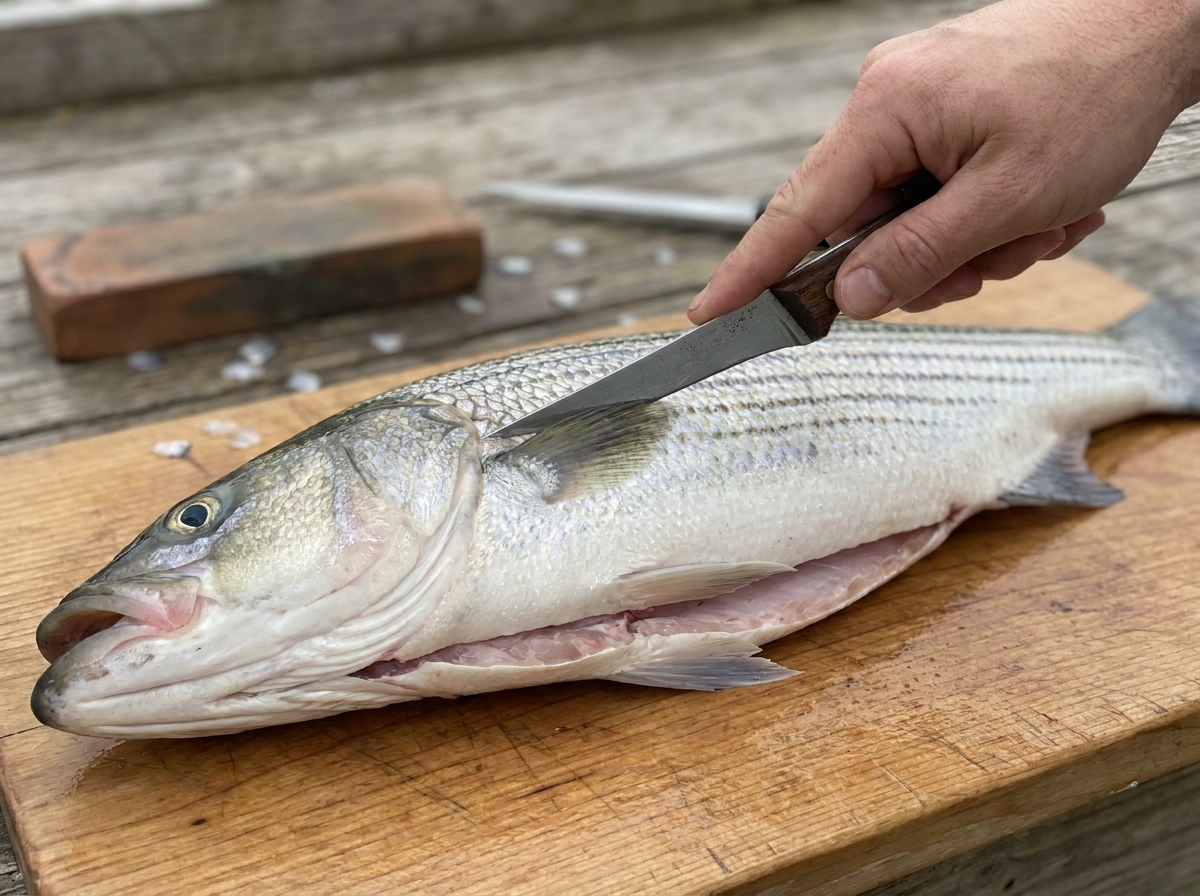
That geometry translates directly into function. On thick-bodied fish, a boning knife is the correct tool, full stop.
Species like striped bass, large red drum, and amberjack present bone structures that require sustained lateral force to navigate. A stiff blade transfers that force cleanly along the cut line. It doesn't wander.
Pin bone removal is where the boning knife earns its place on almost every serious angler's cleaning table. The rigid tip gives you precise, controlled contact along the bone line. Under the lateral pressure required to work through a thick fillet, a flexible blade buckles and pulls the cut off course. A stiff tip stays where you put it.
Joint separation is the other critical application. Breaking down a large fish into sections for transport or storage requires driving through cartilage and connective tissue at the joint. A fillet knife cannot provide the rigidity that task demands. Forcing one into that role doesn't just slow you down; it costs you meat.
The slight upward curve on a boning knife blade has a specific purpose: it keeps the tip tracking along bone surfaces through the full arc of a separation cut. That tip contact is what prevents the blade from diving into surrounding flesh and gouging the fillet you're trying to preserve.
Using a fillet knife for any of these tasks is one of the most common mistakes at the cleaning table. The flex that makes it exceptional on flat species causes it to deflect unpredictably under the force joint work and heavy bone removal require. Every deflection pulls the edge away from bone and into meat. Understanding this distinction is part of building out a complete, capable setup, the kind covered in 10 Essential Fishing Tools Every Serious Angler Should Own.
Where a Sharp Fillet Knife Outperforms Everything Else
Where the boning knife earns its place on thick-bodied fish, the fillet knife owns everything else.
On thin, flat species, a sharp fillet knife is the only correct tool for the job. Flounder, crappie, and perch all share a shallow skeletal structure where the fillet lies close to bone. A flexible blade bends to match that contour, maintaining contact with the spine throughout the stroke. A rigid blade rides over it, leaving usable meat attached to the carcass.
That flex does more than trace the spine. As the blade follows the ribcage curve, it stays on bone rather than cutting through flesh. The result is a cleaner fillet and better yield on every fish, not just the occasional one.
Speed matters dockside. When you're working through a limit of panfish before the ice melts, a flexible fillet knife allows fast, repetitive strokes in a consistent motion. A stiff boning knife forces you to reposition constantly, and it tears rather than slices on smaller fish.
Skinning is where fillet knife uses extend beyond the initial cut. The thin blade slides cleanly between skin and flesh with minimal drag. A boning knife's thicker profile catches and tears, requiring correction passes that cost both time and meat.
Blade length determines whether you can complete the fillet in a single stroke. A 6-inch blade covers panfish and smaller inshore species cleanly. For a larger flounder or a mackerel, a 7-to-9-inch blade gives you the reach to run the full lateral line without lifting and resetting.
For anglers who also need a complete dock-side kit, the bass fishing gear guide covers additional tools worth having in reach during a cleaning session.
Matching the Right Knife to the Species You're Cleaning
Blade length gives you reach. Species anatomy tells you which blade to grab.
Flounder and flatfish go straight to the fillet knife. Their flat, low-profile skeletons sit close to the surface, and a flexible blade is the only way to trace that structure without lifting off bone mid-stroke. Rigidity here means lost meat.
Striped bass, large redfish, and similar thick-bodied fish require both tools in sequence. Run a fillet knife along the lateral line first, where flex lets the blade follow the contour cleanly. Then switch to the boning knife: the heavy rib cage and pin bones demand a stiff tip that won't buckle under lateral pressure. Trying to pull pin bones with a flexible blade is slow, imprecise work.
Mackerel, bluefish, and other pelagic species follow a similar split. A flexible fillet knife handles the initial cut efficiently. Once you're breaking down the collar or working through tough connective tissue near the skin, the boning knife earns its place. Those areas resist a thin blade.
Walleye and freshwater bass are mostly fillet knife territory. A 6 to 7 inch blade covers standard cleaning on both species without issue. The exception is trophy fish or Y-bone removal on large walleye, where a boning knife gives the controlled, precise tip work a flexible blade can't deliver.
The practical takeaway: serious anglers working a mixed cooler will reach for both knives in a single session. If you're still deciding which specs matter before buying, this guide to choosing a fillet knife covers what experienced anglers actually look for. The boning vs. fillet knife question is never either/or; it's about knowing the right blade for each step.
Field Processing Factors That Kitchen Knife Guides Ignore
Knowing which knife belongs in your hand is only part of the equation. The other part is understanding that the cleaning table is nothing like a kitchen counter, and most knife guides are written for the kitchen.
Blade material is the starting point. Saltwater and high humidity accelerate corrosion at a rate dry kitchen environments never produce. Fillet knives should be stainless steel or a high-corrosion-resistant alloy. A kitchen-grade carbon steel blade can develop rust after a single salt session if it isn't dried completely, which rarely happens at a busy cleaning table.
Handle grip is not a secondary concern. Wet hands, fish slime, and cold water strip traction from smooth handles fast. Textured, non-slip grips are a functional requirement at the dock, not a comfort upgrade. A knife that twists under load is a safety problem.
Accessibility matters when time is short. Working through a cooler before the ice melts is a real constraint. A fillet knife fish setup with a fitted sheath and belt clip keeps the blade ready without fumbling through a tackle bag.
A sharp fillet knife needs field maintenance to stay sharp. Edge retention degrades faster outdoors than in controlled kitchen conditions. Carry a ceramic rod or compact portable sharpener. A dull blade demands more force, increases the chance of slipping off bone, and leaves meat on the carcass. This is the same logic behind keeping a fishing multi tool with every function serious anglers actually need in the kit: the right tool, maintained and accessible, does the job cleanly.
Blade length should match your working conditions. Boat-side cleaning often happens in low light, tight quarters, or on a moving deck. A longer blade that works fine on a fixed dock introduces real risk when the platform is shifting. Match length to your typical setup, not to what looks capable in a gear photo.
The Real Cost of Using the Wrong Knife
Equipment failures at the cleaning table compound each other. A blade that deflects under the wrong load, or rides stiff over a spine it should trace, doesn't just slow you down once. It costs you meat on every fish.
When a fillet knife is pushed into joint separation or heavy bone removal, the flex built into that blade becomes the problem. The blade deflects under lateral pressure, pulling the cut edge away from the bone and into surrounding flesh. That deviation isn't recoverable mid-stroke. Each deflection leaves usable meat on the carcass, and the softer the blade, the worse the loss.
The same physics works in reverse. Force a boning knife through a flatfish fillet run and the rigid blade rides over the spine rather than bending to follow it. The fillet stays partially attached to bone along its length. A second pass is required, and that corrective cut tears rather than slices because the angle is never clean the second time through.
This waste compounds. Processed across a full season, an angler who regularly substitutes one knife for the other is leaving a meaningful portion of every catch on the table. That's not a single bad fillet; it's a cumulative loss across every species in every cooler.
Efficiency takes the same hit. Wrong-knife processing requires more passes, more repositioning, and more correction cuts. A clean two-minute fillet becomes a five-minute struggle that also dulls the blade faster by driving it into bone at angles it wasn't built to handle.
Serious anglers who invest in the right tools at each stage, including purpose-matched fish skinner pliers for tasks beyond the blade, maximize yield from every fish they process. That's both economically sound and consistent with the ethic of using what you harvest.
Purpose-Built Fillet Knives for Anglers Who Process Their Own Catch
That cost is avoidable when the right tools are purpose-built for the environment where you actually use them.
BasicGear fillet knives are designed from a fishing-first perspective. These are not culinary blades repurposed for the cleaning table; every design decision starts with how anglers actually work: dockside, wet-handed, often in low light, processing fish back-to-back under time pressure.
That distinction matters in the materials. Blade steel, handle geometry, and edge profile on a fishing-specific fillet knife are engineered for high-use saltwater conditions that kitchen knives are never tested against. Corrosion resistance, grip texture under fish slime, and edge retention through a full cleaning session are non-negotiable specs in this context, not afterthoughts.
When you choose fillet knives for fish work from a brand that builds dedicated fishing gear, the blade flex, tip geometry, and grip design reflect angler use cases, not kitchen prep scenarios. The result is a tool that performs the way you need it to when it counts.
Pairing a BasicGear fillet knife with a dedicated boning knife gives you a complete cleaning table setup that covers every species in the cooler. A limit of flounder comes off clean with a flexible fillet blade tracing the spine. A trophy striped bass gets broken down properly with a stiff boning knife handling the heavy rib structure and pin bones. Each knife does its job; neither is forced into the wrong application.
Explore BasicGear's fillet knife lineup at BasicGearTackle.com to find options matched to the species you target and the processing situations you work in most often.
The Bottom Line: Know Your Knife, Keep Both Within Reach
The right knife for the job isn't a preference; it's a function of blade geometry matched to the task. Boning knife rigidity belongs at the joint, along the pin bone line, and anywhere you're working through the dense structure of a thick-bodied fish. Put a flexible fillet blade in those situations and it deflects under pressure, pulling the cut away from bone and into flesh you could have kept.
Fillet knife flexibility is equally non-negotiable for its own set of tasks. Tracing a spine on flounder, running the ribcage on crappie, skinning a clean fillet: these require a blade that bends to follow the fish rather than force through it. A stiff blade in those situations doesn't just slow you down; it leaves yield on the carcass every single pass.
The boning vs. fillet knife question was never about choosing one. It's about knowing which tool belongs in your hand at each stage of the cleaning process. Most sessions with a mixed cooler will call for both.
Start with your primary species. If you're cleaning flatfish most of the time, a quality fillet knife is the immediate priority. If you're regularly breaking down large striped bass, redfish, or amberjack, a boning knife is not optional equipment; it's the tool that handles what a fillet knife mechanically cannot.
Anglers who run the right blade for each task process fish faster, leave less meat on the bone, and avoid the accelerated edge wear that comes from forcing a knife into the wrong application. Buy both when you need both. Use each for what it was built to do.
Conclusion
The right knife is not about preference; it is about mechanics. Boning knives handle joint work, pin bones, and dense structure where a flexible blade fails under pressure. Fillet knives excel at tracing thin anatomy, running ribcages, and skinning where rigidity costs you yield. Most mixed coolers demand both.
Start by identifying your primary species, then build your kit around what you actually clean. A quality fillet knife first if you work flatfish regularly. A boning knife alongside it the moment large-bodied fish become part of your regular haul.
Anglers who match the blade to the task process faster, recover more meat, and keep their edges longer. That adds up across a full season. Audit your cleaning table setup, identify the gaps, and put the right tool in your hand before the next trip home with a full cooler.
Keep reading