Are Cast Nets Legal in Your State? How to Check
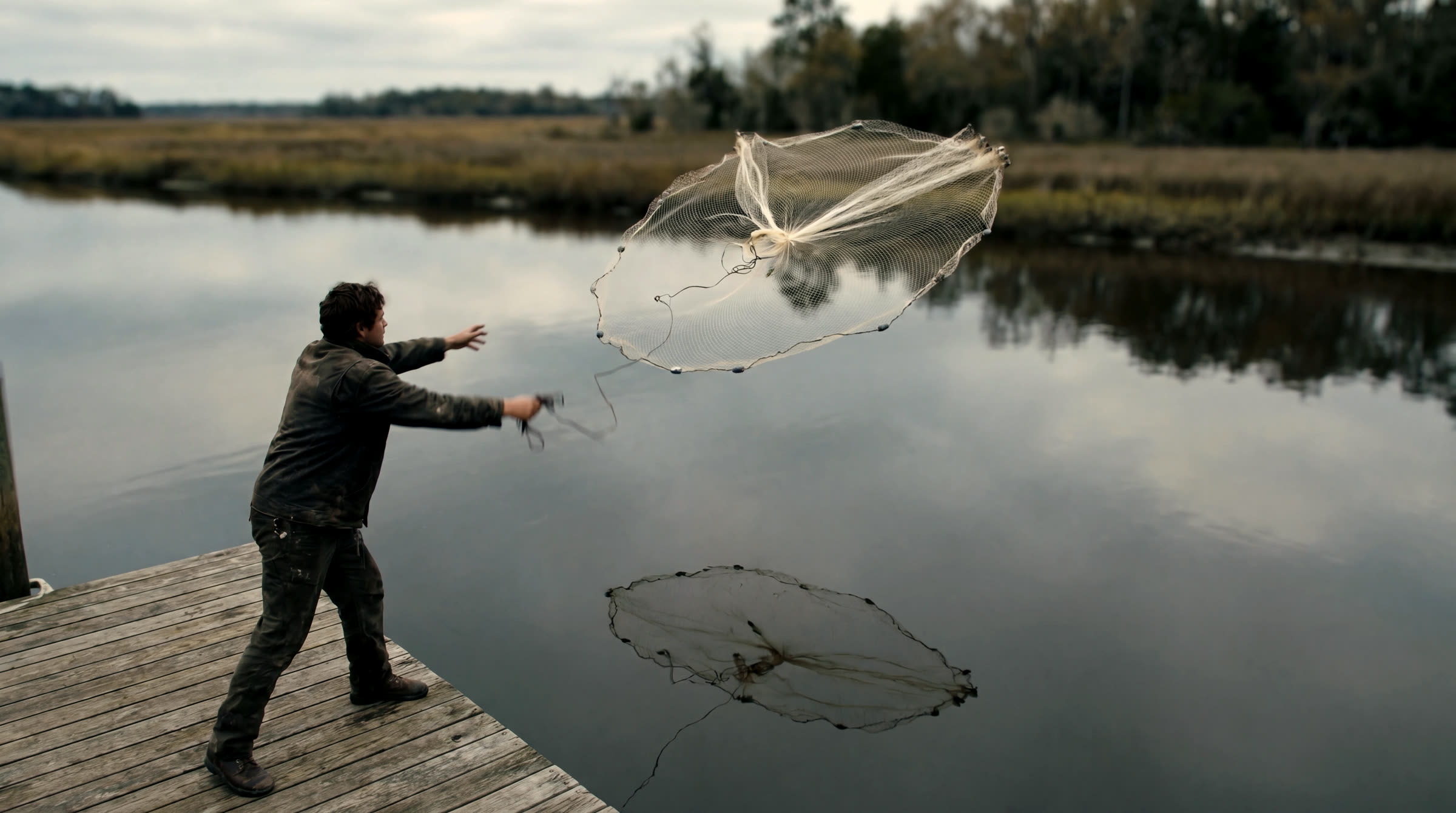
"Are cast nets legal here?" is almost always the wrong question — the right one is "what are the rules where I fish?" Cast nets are legal in the overwhelming majority of states, but nearly every state that allows them attaches conditions: a maximum size, a mesh limit, species you can't target, or waters where they're off-limits entirely. Those rules change, and they vary enough state to state that generic advice can get you a citation. Here's what to actually check, and where.
The restriction types you'll run into
Almost every state regulation falls into one of a handful of categories. Knowing the categories makes it much faster to read your state's actual rule once you find it.
- Size caps. A maximum radius or diameter for the net itself. Some states cap by radius (the distance from the horn to the lead line), others by diameter (the full open circle) — reading the wrong measurement into the wrong rule is the single most common mistake anglers make. See our cast net size chart for how radius and diameter relate.
- Mesh minimums (or maximums). A required mesh size, usually to protect juvenile fish of a regulated species from being caught as bycatch. Mesh rules are frequently species-specific rather than blanket state rules.
- Species limits.Some states restrict cast nets to bait species only, prohibit targeting game fish with a net at all, or require immediate release of anything caught that isn't legal bait.
- Water-type rules. Cast nets may be permitted in some waters (tidal, saltwater, certain lakes) and restricted or banned in others (designated trout streams, specific rivers, freshwater management areas).
- Licensing. Most states require a valid fishing license to use a cast net at all, and some require an additional bait-collecting permit on top of the standard license.
Rules change — verify with the actual agency
State fish and wildlife regulations get amended, sometimes annually, and a cast net rule can shift with very little public notice. We don't reproduce specific numeric limits in this post for that reason — any figure printed here would eventually be wrong for someone. Instead:
- Start with your state's official fish and wildlife or marine fisheries agency website — not a forum post, not a five-year-old blog.
- Search their current fishing regulations summary for "cast net" specifically — general fishing rules and net-specific rules are often published separately.
- If a limit is ambiguous (e.g., it's unclear whether a figure is radius or diameter), call the agency directly before you buy or fish. It's a five-minute call and it's the only way to be certain.
- Re-check annually, or before any trip to a state you don't fish regularly — rules that applied last season aren't guaranteed to still apply.
State-by-state summaries
To make this easier, we maintain a cast net laws by statehub summarizing what we've found in each state's current published regulations, with a recommended BasicGear net size and mesh that fits comfortably within the limits we found at time of research. It's a starting point for your own verification, not a substitute for checking the source yourself. A few of the most-searched states:
The full list covers every state — find yours on the cast net laws hub page.
Buying within a legal size limit
If your state caps cast nets by radius or diameter, buy accordingly rather than assuming a "standard" size is fine — BasicGear nets range from 3 ft to 12 ft radius, so there's room to stay well under most limits without sacrificing much coverage. Our size guide and guided net finderboth help match a radius and mesh to your situation once you know the ceiling you're working under.
Bottom line: cast nets are legal to use across nearly the entire country, but "legal" almost always comes with fine print. Five minutes checking your state's current rule is a lot cheaper than a citation.
Check your state, then shop within the limit
Once you know your state's size and mesh rules, every BasicGear cast net configuration is available on Amazon.
Browse more guides